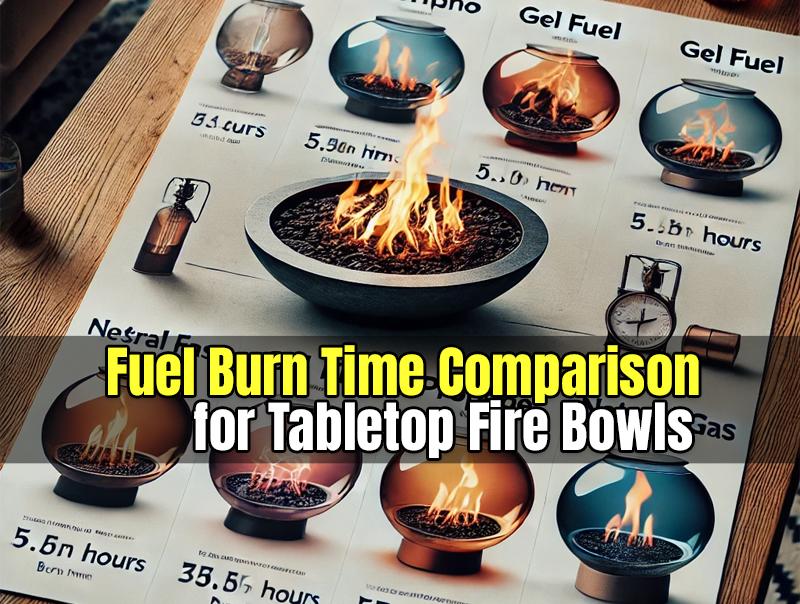
Understanding the burn time of various fuels is crucial when choosing a tabletop fire bowl. Different fuels offer unique benefits and considerations. Let’s explore the burn times and characteristics of the most common types of fuel.
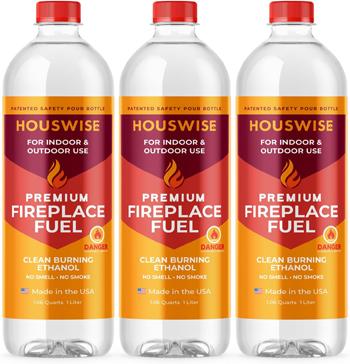
Bioethanol: Clean and Efficient
Experience and Benefits: Bioethanol is a popular choice due to its clean-burning properties. It typically lasts around 4 hours per refill, providing a vibrant and smokeless flame. This makes it ideal for both indoor and outdoor use.
Considerations: Bioethanol is easy to use and relatively moderate in cost. Its clean burn reduces maintenance, ensuring a pleasant experience without the hassle of smoke.
Gel Fuel: Convenient and Portable
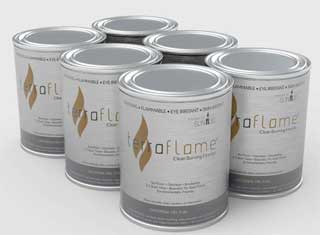
Experience and Benefits: Gel fuel offers convenience with a burn time of approximately 3 hours per canister. It’s clean-burning and produces a lovely, flickering flame, making it a great option for creating ambiance.
Considerations: Gel fuel is easy to handle and store. Like bioethanol, it’s moderate in cost and ideal for indoor use due to minimal smoke production.
Propane: Long-Lasting and Powerful
Experience and Benefits: Propane stands out with an impressive burn time of up to 8 hours per tank. It provides a strong, consistent flame without producing smoke, making it perfect for extended outdoor gatherings.
Considerations: While propane tanks are larger and require proper storage, the long burn time and low cost make it a practical choice for frequent use. It’s slightly more complex to set up compared to gel fuel and bioethanol.
Natural Gas: Continuous Supply
Experience and Benefits: Natural gas offers the longest burn time, virtually unlimited as it’s connected to a gas line. This ensures a continuous flame, ideal for those who want a reliable and maintenance-free option.
Considerations: Installing a natural gas line can be costly and requires professional assistance. However, the convenience and low operating cost can outweigh the initial investment for regular users.
Wood: Traditional and Atmospheric
Experience and Benefits: Wood provides a traditional fire experience with a burn time of about 1.5 hours per log. The crackling sound and natural aroma create a cozy and nostalgic atmosphere.
Considerations: Using wood requires more effort in terms of maintenance and cleanup. It produces moderate smoke, making it more suitable for outdoor use. Wood is also the least expensive fuel option.
Comparison Chart
To help you make an informed decision, here’s a comparison chart summarizing the burn times, smoke levels, ease of use, and refill costs for each type of fuel:
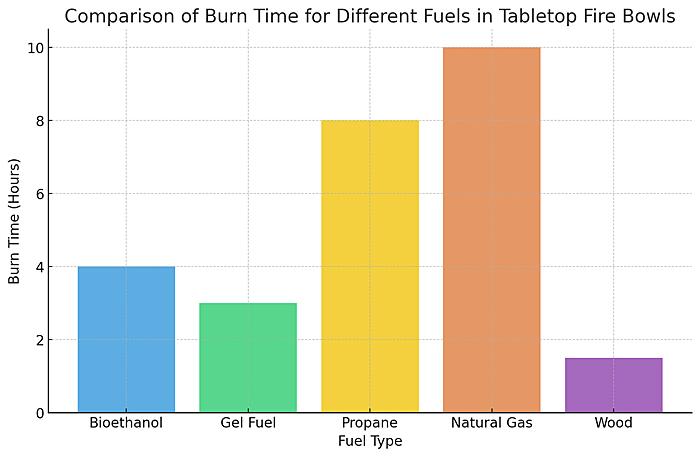
| Fuel Type | Burn Time (Hours) | Smoke Level | Ease of Use | Refill Cost |
| Bioethanol | 4.0 | Minimal | High | Moderate |
| Gel Fuel | 3.0 | Minimal | High | Moderate |
| Propane | 8.0 | None | Medium | Low |
| Natural Gas | 10.0 | None | Medium | Low |
| Wood | 1.5 | Moderate | Low | Low |
Which Fuel is Most Cost-Effective?
Based on cost-effectiveness, propane and natural gas stand out as the best options. Propane offers long burn times at a low cost per use, while natural gas provides continuous use with minimal operating costs.
For those prioritizing initial cost, wood is the least expensive but comes with higher maintenance and shorter burn times. Bioethanol and gel fuel offer a middle ground with moderate costs and convenient use. Choose the fuel that best fits your usage frequency, budget, and setting to maximize your fire bowl experience.
The Bottom Line:
Choosing the right fuel for your tabletop fire bowl depends on your preferences and intended use. Bioethanol and gel fuel offer clean, moderate burn times suitable for indoor settings. Propane and natural gas provide longer burn times for extended use, while wood offers a traditional fire experience.
By understanding the burn times and characteristics of each fuel, you can select the best option to enhance your fire bowl experience. Enjoy the warmth and ambiance with confidence, knowing you’ve made an informed choice.
Last Updated August 4, 2024