
Gas flame bowls are a great way to bring instant warmth and atmosphere to your outdoor hangout spots. Compact but surprisingly powerful, they work well on patios, balconies, and even at campsites as a cleaner alternative to wood-burning fire pits. If you’re comparing different fire bowl fuel types, propane is often the go-to choice when you want turn-the-knob convenience and steady heat.

Below, you’ll find a straightforward guide on how to use a tabletop propane bowl safely, the main pros and cons, which features matter most, and simple fixes for the most common issues people run into with gas-powered tabletop fire pits.
How to Use a Tabletop Propane Fire Bowl
Running a gas table-top fire feature, like the COSIEST 12″ model, is very straightforward once you’ve done it once or twice. Here’s the basic workflow:

- Connect the propane tank: Attach a standard 20 lb propane tank to the fire bowl with the supplied hose and regulator. Make sure all fittings are snug and check for leaks according to the manufacturer’s instructions before lighting.
- Ignite the burner: Most propane fire bowls include a push-button or spark ignition. Open the tank valve, turn the control knob to the “light” position, then press the ignition button until the burner catches.
- Adjust the flame height: Once lit, use the control knob to increase or decrease the flame. A higher setting gives more warmth for cool evenings; a lower setting is perfect for soft, candle-like ambiance.
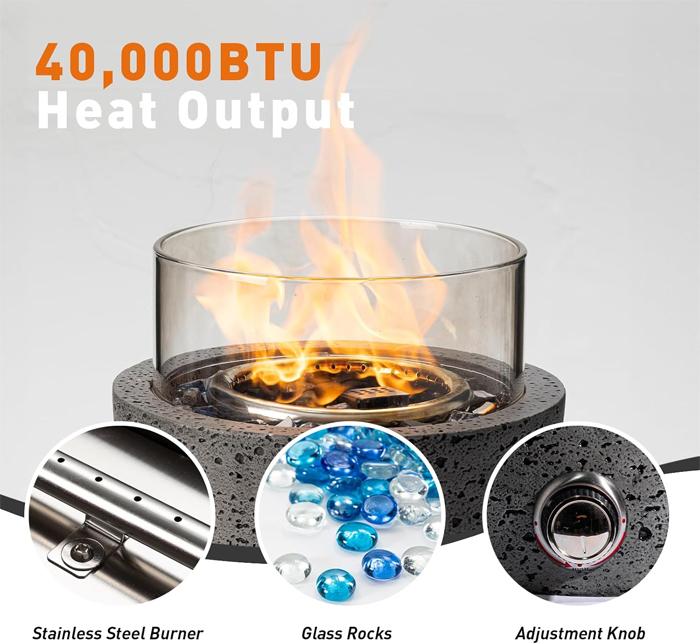
- Add wind protection if needed: Many models, including the COSIEST bowl, come with a glass wind guard. This helps stabilize the flame, improves safety, and frames the fire for a more polished look—especially useful if you care a lot about fire centerpiece styling on your outdoor table.
- Shut down safely: When you’re done, turn the control knob to the off position, then close the valve on the propane tank. Let the bowl cool completely before covering, moving, or storing it.
Pros and Cons
Advantages:
- Convenience: Propane is a clean, efficient fuel option that provides instant flame—no wood, no kindling, and no waiting for coals to catch.
- Portability: Most bowls are light enough to move between a patio table, balcony, or RV campsite, as long as you can bring a propane tank along.
- Precise control: Adjustable flame settings let you fine-tune both heat and ambiance, from a strong, warming flame to a gentle flicker.
- Low mess: Unlike wood fires, there’s no ash, no sparks, and far less smoke, which is especially nice on smaller patios or around outdoor seating cushions.
Disadvantages:
- Fuel management: You’re tied to a propane tank, which needs refilling or swapping. If you don’t keep an eye on levels, you can unexpectedly run out mid-evening.
- Higher initial cost: Quality propane bowls usually cost more upfront than many gel or bioethanol tabletop models.
- Heat coverage limits: Smaller tabletop models are great for close seating but may not warm a large deck on their own. If you’re planning to rely on a single bowl in a big space, you may be underwhelmed by the overall fire bowl heat coverage.
Features to Look for When Buying
Not all propane fire bowls are built the same. As you compare models, pay special attention to these specs and design details:
| Feature | Importance |
|---|---|
| BTU Rating | Higher BTUs (such as 40,000 BTU) mean more heat. For a tabletop unit, aim for at least 20,000 BTU if you want noticeable warmth, not just looks. |
| Burner Material | Stainless steel burners tend to last longer, resist rust, and provide more even flame patterns. |
| Wind Guard | Helps keep the flame stable on breezy nights and improves safety, especially in more exposed outdoor setups. |
| Design and Finish | Magnesium oxide bases (MgO) offer a heat-resistant shell that mimics stone or concrete for a high-end look. |
| Ignition System | Push-button or electronic ignition makes lighting faster and more reliable than manual methods. |
| Safety Features | Look for certifications and built-in safeguards (like flame failure devices or auto-shutoff) to help prevent gas leaks and accidental relights. |
28″ Fire w/ Wind Guard
4,000 BTU Propane

Umbrella Hole Fire Bowl
5,400 BTU Propane

12″ MgO Base Fire Pit
40,000 BTU Propane
Common Concerns & Simple Solutions
1. Propane Tank Aesthetics
One of the biggest complaints about propane bowls is the exposed tank and hose, which can spoil an otherwise beautiful setup. Solution: Hide the tank inside a decorative cover, a side table designed for propane storage, or a ventilated deck box. That way, your flame can stay the focal point while the fuel source disappears into the background.
2. Flame Stability in Windy Conditions
On gusty days, wind can cause the flame to sputter or even blow out. Solution: Choose a bowl with a glass wind guard or add one later if your model allows it. Positioning your bowl closer to a wall or windbreak and checking the manufacturer’s recommendations for optimal fire bowl heat output can also help you find the best spot on your patio.
3. Running Out of Propane
It’s easy to underestimate how much fuel you’ve used—until the flame cuts out mid-party. Solution: Add a propane tank gauge so you can monitor fuel levels at a glance, and consider keeping a spare tank on hand if you host often. This small step can save a lot of frustration and keep your fire bowl operating cost predictable over time.
Final Thoughts
A propane table fire feature is an excellent upgrade if you want real flame, reliable heat, and easy operation without the mess of wood. By paying attention to BTU rating, burner quality, wind protection, and safety features, you can choose a model that fits both your space and how you like to entertain.
Set up thoughtfully, a gas flame bowl can become the highlight of your outdoor area—whether you’re enjoying quiet evenings for two or gathering a group of friends. With the right bowl and fuel plan, your fire bowl can add warmth, light, and a polished, modern look to any outdoor occasion.